

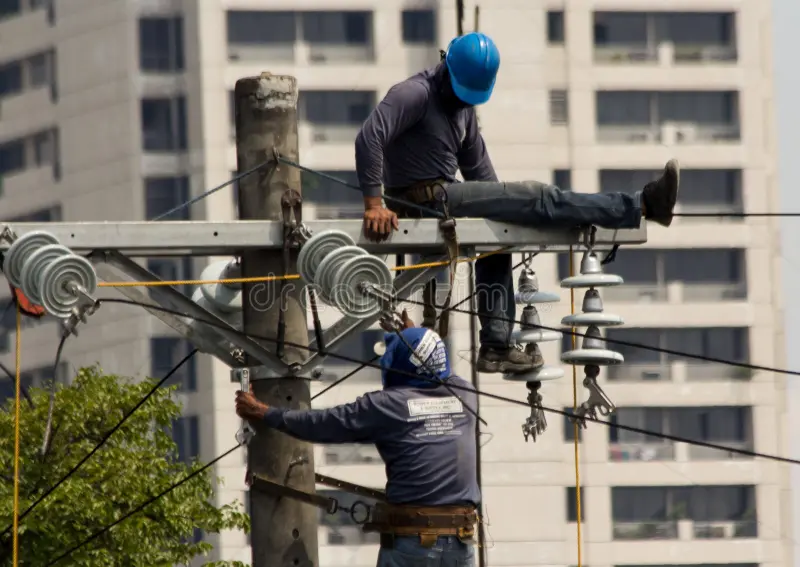

⚡️ Wiring the Future: Your Blueprint for a Powerful Career as a Licensed Electrician
Hello, logical thinkers and safety-first professionals! Have you ever flipped a switch and instantly enjoyed light, power, or climate control? That seamless flow of energy—the very heartbeat of our modern world—is guaranteed, installed, and maintained by the highly skilled Electrician.
The Electrician’s job is one of the most stable, essential, and technically demanding trades. They are the frontline experts in a high-stakes environment, combining deep knowledge of electrical theory with the hands-on dexterity to install, troubleshoot, and repair complex wiring systems. It’s a career where there’s zero tolerance for error, but the rewards are substantial, including excellent pay, strong job security, and the satisfaction of mastering a critical trade.
We’re pulling back the curtain on this electrifying profession—exploring the immense scope of the work, the rigorous path to licensure, and the unique blend of technical expertise and problem-solving skills that defines a Master Electrician. Get ready to power up your future!
💡 The Electrician’s Job Description: The Conductor of Current
 An Electrician is a tradesperson specializing in the design, installation, maintenance, and repair of electrical wiring, equipment, and fixtures in residential, commercial, and industrial settings. Their primary focus is ensuring that electrical systems operate safely, efficiently, and in strict compliance with safety codes.
Core Responsibilities:
- Installation and Wiring: Installing new electrical systems, including wiring, cabling, conduit, circuit breakers, outlets, and lighting fixtures, often working from complex blueprints or schematics.
- Troubleshooting and Diagnostics: Using specialized testing equipment (like multimeters, circuit tracers, and ohmmeters) to locate and diagnose malfunctions in electrical systems, equipment, and apparatus, often under urgent conditions.
- Maintenance and Repair: Performing preventative maintenance on existing systems to ensure longevity and efficiency. This includes repairing or replacing faulty wiring, switches, fuses, and electrical panels.
- Code Compliance: Ensuring all work strictly adheres to the National Electrical Code (NEC) or relevant national and local electrical safety codes. The Electrician is the final safety check on the work they perform.
- Panel and Service Upgrades: Installing or upgrading main electrical panels, service entrance cables, and metering equipment to handle increased power loads for modern demands (e.g., EV chargers, large appliances, commercial machinery).
- Low-Voltage Systems: Installing and maintaining low-voltage wiring for systems like data communication (ethernet), security alarms, fire alarms, and smart home technology.
- Documentation: Recording work performed, materials used, and providing clear explanations of the diagnosis and repair to clients and contractors.
- Safety Protocol: Strictly following all safety procedures (e.g., Lockout/Tagout, proper grounding) when working with high-voltage electricity to prevent injury to themselves and others.
The Electrician serves as a critical safety expert, ensuring that the necessary power is delivered to the right place, at the right time, without fire or injury risk.
🎓 Experience and Qualifications: Earning the License
The pathway to becoming a certified Electrician is a highly structured, multi-year process that emphasizes hands-on experience and code knowledge, culminating in a critical professional license.
Essential Qualifications:
- Education: A High School Diploma or GED is the minimum requirement. This must be supplemented by a vocational school certificate, technical degree, or, more commonly, participation in an accredited Apprenticeship Program.
- Apprenticeship (The Core Pathway): The most common route is a 4-to-5-year apprenticeship program sponsored by a union (like the IBEW) or a non-union contractor association. This program combines approximately 8,000 hours of paid, on-the-job training with 500-1,000 hours of classroom instruction in electrical theory, blueprint reading, and code.
- Journeyman License: After successfully completing the apprenticeship hours and classroom work, the individual qualifies to take the state or local Journeyman Electrician Exam. Passing this exam grants the license to work independently under supervision.
- Master Electrician License (The Pinnacle): A Journeyman must typically accumulate several more years of experience (usually 2-4 years) and pass a more comprehensive exam covering advanced theory, design, and business law to achieve the Master Electrician License. This license allows them to pull permits, bid on jobs, and supervise other electricians.
- Continuing Education: Electricians must regularly take continuing education courses to maintain their license and stay current with the latest revisions to the NEC and local codes.
- Physical Fitness: The job requires physical stamina, the ability to climb ladders, lift heavy equipment, and work in various environments (attics, crawl spaces, outdoor sites).
The license signifies that the Electrician is not only competent but also legally accountable for the safety of their work.
💡 Special Skills: The Electrician’s Diagnostic Mind
The best Electricians possess a powerful blend of technical knowledge, mathematical precision, and an almost intuitive diagnostic ability that allows them to solve problems that are often invisible to the eye.
Technical & Code Skills (Hard Skills):
- NEC Code Mastery: Expert, up-to-date knowledge of the National Electrical Code (NEC) and local amendments. This code is the literal rulebook for safe electrical installation.
- Circuit Theory and Math: Deep understanding and quick application of fundamental electrical principles, including Ohm’s Law and formulas for calculating voltage drop, load requirements, and circuit size.
- Blueprint and Schematic Reading: The ability to quickly interpret complex architectural blueprints and electrical schematics to plan an installation or trace a fault.
- Tooling and Testing Mastery: Expert use of all industry tools, from specialized conduit benders to advanced diagnostic equipment for tracing buried lines or intermittent faults.
- Conduit Bending Precision: The high-level trade skill of accurately bending metal conduit to specific angles and offsets to protect and route wiring neatly and professionally.
Professional & Safety Skills (Soft Power):
- Systematic Troubleshooting: The core skill. The ability to approach a complex failure with calm logic, using testing equipment to isolate the problem systematically (is it a short, an open circuit, or a bad component?).
- Safety First Mentality: An unwavering commitment to safety protocols (e.g., proper grounding, de-energizing circuits) is crucial, as the consequences of error are often fatal or result in fire.
- Attention to Detail and Meticulousness: Wiring must be installed cleanly, neatly, and secured properly. Every connection must be solid; sloppy work is dangerous work.
- Customer Communication: Clearly and calmly explaining technical issues, repair needs, and code requirements to homeowners, business owners, or contractors who lack electrical expertise.
- Time Management: The ability to estimate job times accurately, manage material flow, and complete high-quality work efficiently to meet construction deadlines.
🚀 The Impact: Essential, Stable, and High-Demand
A career as an Electrician is one of constant demand. The world is becoming more electrified, not less—from smart homes and electric vehicles to data centers and industrial automation. This ensures a career path with exceptional stability and high earning potential, with Master Electricians often running successful contracting businesses. Your work is tangible, permanent, and directly responsible for the functionality and safety of every building around you.
If you are logical, detail-oriented, comfortable working with math and physics, and ready for a hands-on career where you solve challenging technical puzzles daily, then becoming a licensed Electrician is your opportunity to wire the world for the future.