

❄️ The Masters of Comfort: Your Deep Dive into the World of the Aircon Technician
Hello, problem-solvers and hand-on heroes! Have you ever experienced a scorching summer day or a building where the air felt stale, only to have a single skilled professional arrive and restore perfect, refreshing comfort? That professional is the Aircon Technician (or HVAC Technician), and their work is absolutely crucial to modern life, health, and commerce.
In our climate-controlled world, the Aircon Technician is the unsung engineer of indoor environments. They are part detective, part electrician, part plumber, and part mechanic, blending a vast array of technical skills to ensure the complex heating, ventilation, air conditioning, and refrigeration (HVAC-R) systems we rely on function flawlessly. It’s a career that offers excellent job security, immediate results, and the satisfaction of mastering a highly technical trade.
We’re opening the maintenance access panel to explore the immense scope of this vital job—what the work truly entails, the specialized training required, and the unique combination of technical smarts and people skills that define an outstanding Aircon Technician. Get ready for a high-demand, hands-on career!
🌬️ The Aircon Technician’s Job Description: The Environmental Control Expert
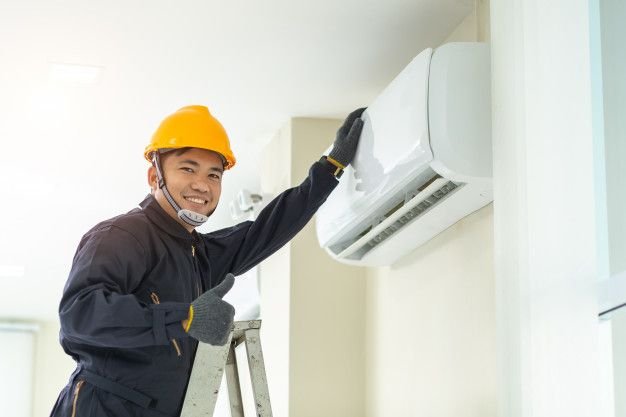
An Aircon Technician is responsible for the installation, maintenance, repair, and troubleshooting of indoor air quality systems, primarily focusing on cooling and refrigeration equipment in residential, commercial, and industrial settings.
Core Responsibilities:
- Installation and System Set-up: Installing new HVAC systems, including air conditioners, heat pumps, ductwork, and ventilation equipment. This involves reading and interpreting blueprints and technical schematics to ensure correct sizing and placement.
- Preventive Maintenance (PM): Performing routine, scheduled maintenance to maximize system efficiency and longevity. PM includes cleaning coils, changing filters, checking and balancing refrigerant levels, lubricating moving parts, and performing performance checks.
- Diagnostics and Troubleshooting: Using specialized diagnostic tools (like multimeters, pressure gauges, and leak detectors) to meticulously pinpoint the source of electrical, mechanical, or refrigeration faults within complex systems.
- Repair and Component Replacement: Repairing or replacing malfunctioning components such as compressors, condensers, fans, motors, thermostats, relays, and piping. This often involves intricate tasks like brazing and welding.
- Refrigerant Handling: Safely handling, recovering, recycling, and charging refrigerants in compliance with strict environmental regulations, such as those mandated by the EPA Section 608 Certification.
- Customer Communication: Clearly explaining complex technical issues, repair options, and costs to customers in an understandable way, ensuring customer satisfaction and building trust.
- Documentation and Record Keeping: Maintaining accurate, detailed records of all service calls, maintenance performed, parts used, and refrigerant levels for compliance and warranty purposes.
- Safety Compliance: Adhering strictly to all safety protocols, especially when working with high-voltage electricity, pressurized refrigerants, ladders, and at heights or in confined spaces.
The Aircon Technician is a critical resource, ensuring that the environment is comfortable, the air is healthy, and the energy consumption is efficient.
🛠️ Experience and Qualifications: The Skilled Trade Pathway
The path to becoming a licensed Aircon Technician prioritizes technical education and hands-on apprenticeship over a traditional university degree.
Essential Qualifications:
- Education: A High School Diploma or GED is the minimum requirement. This must be supplemented by a Certificate or Associate’s Degree from an accredited technical or trade school in HVAC-R technology. These programs typically last 6 months to 2 years and provide foundational knowledge in electrical theory, thermodynamics, and plumbing.
- Apprenticeship/Field Experience: The most critical qualification is practical, supervised experience. Many technicians complete a 3-to-5-year apprenticeship under a licensed veteran technician or through a union program, gaining thousands of hours of on-the-job training. Entry-level roles like HVAC Helper or Installer are common starting points.
- EPA Section 608 Certification (Mandatory for US): This certification, issued by the Environmental Protection Agency, is legally required for anyone working with regulated refrigerants. This is a non-negotiable step in the career.
- State or Local Licensing: Many states, provinces, and municipalities require additional licensing or examination to practice as a certified technician or master contractor, which typically requires a certain number of years of experience post-training.
- Valid Driver’s License: Essential for traveling to various job sites (residential, commercial, industrial) throughout the workday.
Employers look for candidates who have demonstrated a strong mechanical aptitude, a passion for the trade, and a commitment to ongoing learning.
💡 Special Skills: The Technician’s Diagnostic Mindset
The best Aircon Technicians possess a sharp analytical mind and an ability to translate complex system behavior into straightforward solutions.
Technical & Diagnostics Skills (Hard Skills):
- Electrical and Mechanical Troubleshooting: The ability to trace complex wiring diagrams, safely test circuits for voltage, current, and resistance, and diagnose mechanical failures in pumps, motors, and fans.
- Refrigeration Cycle Expertise: Deep, intuitive understanding of the thermodynamic principles that govern the refrigeration cycle (compression, condensation, expansion, and evaporation) and how to identify problems in each stage.
- Brazing and Piping Skills: Proficiency in joining copper piping using specialized tools and techniques (like brazing) to create leak-tight refrigerant lines and maintain system integrity.
- Blueprint and Schematic Reading: The ability to accurately interpret and execute installation or repair plans from technical drawings and manufacturer manuals.
- Building Automation Systems (BAS) Knowledge: Growing familiarity with smart thermostats, digital controls, and computerized systems that manage energy consumption in large commercial buildings.
Professional & Customer Skills (Soft Power):
- Problem-Solving and Critical Thinking: The ability to approach a broken, non-communicative system with a methodical, diagnostic mindset, ruling out possibilities one by one until the root cause is found—the ultimate system detective work.
- Physical Stamina and Dexterity: The physical ability to climb ladders, lift heavy equipment (compressors, condenser units), kneel in tight spaces (attics, crawl spaces), and work outdoors in all weather conditions.
- Customer Service and Communication: Providing clear, calm, and professional communication, especially when dealing with upset customers whose heating or cooling has failed. Explaining technical fixes simply and providing accurate time estimates is crucial.
- Time Management: The skill to efficiently manage a demanding schedule of service calls, prioritizing emergency breakdowns over routine maintenance, and ensuring punctuality for appointments.
- Safety Consciousness: A constant, non-negotiable commitment to personal safety and the safety of clients and co-workers, especially when dealing with high voltage and hazardous materials.
🚀 The Impact: A Career That Truly Matters
A career as an Aircon Technician is a gateway to diverse industries—from working on residential units to large commercial chillers, industrial refrigeration, or even specialized medical cooling systems. The job is recession-resistant, as maintaining comfort is always essential, and it is future-proof, with growing demand for technicians skilled in energy-efficient and “green” HVAC technologies.
If you enjoy hands-on work, excel at troubleshooting, have a passion for technical systems, and want a career that offers immediate, tangible results (like cooling down a hot customer’s home!), then the HVAC-R field is ready for you to step up and master the elements.