

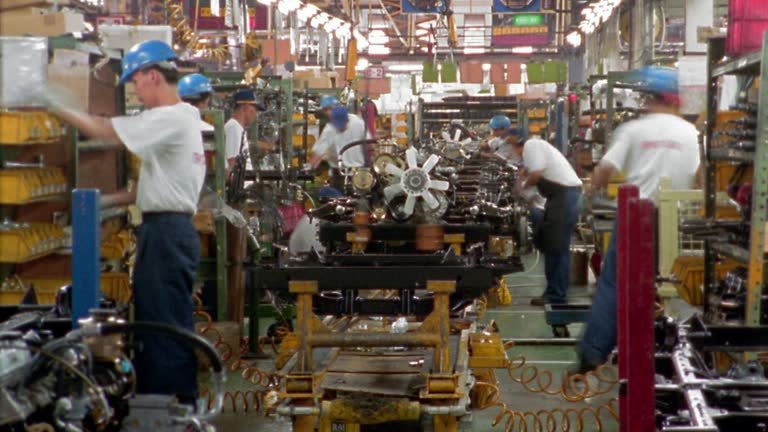

🛠️ The Heart of the Maker Space: Your Guide to a Powerful Career as a Workshop Worker
Hello, hands-on heroes, fixers, and fabricators! Have you ever walked into a space buzzing with the sounds of machinery, the scent of sawdust or hot metal, and the energy of creation? That place is a Workshop, and the indispensable person making the magic happen is the Workshop Worker (often called a Shop Hand, Fabrication Assistant, or Shop Technician).
The term Workshop Worker is broad, covering a vast range of environments—from woodworking studios and metal fabrication shops to automotive repair bays and intricate prototyping labs. But the core essence of the job is the same: you are the engine of production and the master of tool applications, requiring a dynamic blend of mechanical aptitude, precision, safety vigilance, and problem-solving skills.
This is a career built on practical skill, offering immediate, stable employment and clear pathways into advanced, highly specialized trades like welding, machining, or custom carpentry. We’re opening the shop floor to explore this essential profession—dissecting the varied job description, the necessary training and experience, and the unique combination of technical literacy and resilience that defines a productive Workshop Worker. Get ready to build your future, piece by piece!
🔩 The Workshop Worker’s Job Description: The Versatile Specialist
A Workshop Worker is a multi-skilled professional responsible for assisting with, preparing for, and executing tasks related to the production, assembly, repair, and maintenance of items or equipment within a controlled workshop environment. Their versatility and reliability are critical to operational efficiency.
Core Responsibilities:
- Preparation and Fabrication Assistance: Preparing materials for processing, which includes measuring, cutting (using saws, shears, torches), grinding, sanding, and deburring raw stock (wood, metal, plastic) according to specifications or blueprints.
- Machine Operation (Basic to Intermediate): Operating common workshop machinery and power tools safely, such as drill presses, band saws, sanders, bench grinders, and potentially basic manual lathes or milling machines, always following proper procedures.
- Assembly and Finishing: Assembling components and sub-assemblies using hand tools, fasteners, adhesives, or basic welding/soldering. Performing finishing work like painting, buffing, polishing, or basic quality checks on finished items.
- Tool and Equipment Maintenance: Performing routine maintenance and calibration checks on hand tools and machinery (e.g., blade changes, lubrication, cleaning) to ensure their longevity and safe operation. Reporting any need for major repairs.
- Inventory and Organization: Managing inventory of raw materials, parts, and consumables (e.g., screws, cutting fluids). Ensuring the workspace is kept clean, organized, and free of hazards to comply with 5S principles and safety standards.
- Quality Control (QC) Support: Using basic measuring tools (rulers, calipers, squares) to inspect work-in-progress and finished products against dimensions and quality specifications. Identifying and segregating defective materials.
- Safety and Compliance: Strictly adhering to all workshop safety protocols, including wearing correct Personal Protective Equipment (PPE) (safety glasses, gloves, steel-toed boots), and following safe lifting and handling procedures.
- Material Handling: Moving materials around the shop floor using pallet jacks or hand trucks, and potentially assisting in the loading/unloading of deliveries.
The Workshop Worker is the ultimate support role, providing the precision and operational efficiency that allows specialized tradespeople (Welders, Machinists) to focus on complex tasks.
🎓 Experience and Qualifications: Practicality Trumps Pomp
The path to a rewarding Workshop Worker career values practical, hands-on experience and demonstrable technical aptitude over purely academic qualifications.
Essential Qualifications:
- Education: A High School Diploma or GED is typically required, along with a strong foundation in practical mathematics (fractions, decimals, measurement) and geometry.
- Vocational or Technical Training (Highly Recommended): Completion of a Vocational Certificate or basic training course in a relevant trade (e.g., Carpentry Basics, Shop Safety, Introductory Welding) is a significant advantage, demonstrating fundamental knowledge.
- Hands-on Experience: Previous experience in a relevant hands-on environment—even from construction, automotive repair, or large-scale DIY projects—is valued. Many roles start with an entry-level “Shop Helper” position for training.
- Safety Training: Mandatory completion of basic safety certifications, such as OSHA 10-Hour training, focusing on hazard communication, machine guarding, and fire prevention.
- Physical Stamina: The job is physically active, requiring the ability to stand for long periods, lift and move materials (often up to 50 lbs.), bend, and work in noisy, sometimes dusty environments.
- Tool Literacy: Demonstrable comfort and familiarity with a wide array of hand tools (wrenches, screwdrivers, clamps, measuring tapes) and common power tools.
- Blueprint Reading (Basic): The ability to read and interpret basic mechanical or architectural drawings and simple schematics to understand part dimensions and assembly sequence.
A motivated worker with strong mechanical aptitude and a dedication to safety can quickly climb the ranks in a workshop environment.
💡 Special Skills: The Mechanic’s Mind and the Eye for Detail
An exceptional Workshop Worker combines discipline and adherence to safety with a resourceful, mechanic’s instinct for making things work correctly.
Technical & Mechanical Skills (Hard Skills):
- Measurement and Precision: The fundamental skill. Expert proficiency in using measuring tapes, calipers, squares, and gauges to cut materials to precise specifications, understanding the importance of accuracy to the final assembly.
- Tool Proficiency and Customization: Mastery of common tools, knowing their limitations, and the ability to adapt tools or create simple jigs to perform non-standard tasks more efficiently and safely.
- Mechanical Aptitude: A natural instinct for how machines and components fit together. The ability to listen to a machine and instinctively recognize if a bearing is failing or a belt is slipping.
- Material Science (Basic): Understanding how different common materials react to processes (e.g., wood grain direction, metal thermal expansion, different adhesive cure times).
- Troubleshooting (Small Scale): The ability to diagnose and repair minor equipment problems (e.g., fixing a jammed machine, replacing a faulty switch) rather than immediately calling a supervisor.
Organizational & Safety Skills (Soft Power):
- Safety Vigilance (Non-Negotiable): An uncompromising commitment to shop safety, especially concerning machine guarding, proper ventilation, and using Lockout/Tagout procedures. They are the first to spot and correct a safety violation.
- Organization and Flow: The discipline to maintain a clean workspace (the “Clean as you Go” principle), ensuring tools are returned and materials are staged efficiently to minimize wasted time.
- Attention to Detail: Meticulous checking of parts for burrs, sharp edges, or incorrect dimensions before passing them to the next stage, preventing costly rework later.
- Work Ethic and Resilience: A willingness to tackle any task—from heavy cleaning to high-precision work—with equal focus and professionalism.
- Clear Communication: Effectively communicating material shortages, machine downtime, or quality control issues concisely and accurately to supervisors and colleagues.
🚀 The Impact: Stability and Skill Advancement
The career of a Workshop Worker is fundamental to industrial, construction, and custom goods sectors. The demand for hands-on, multi-skilled individuals who can safely and efficiently run a shop is constant. This role provides an outstanding launchpad: a motivated worker can leverage the diverse experience gained here to specialize in highly paid trades—becoming a certified Welder, a CNC Machinist, or a Master Cabinetmaker. The skills you master in the workshop are durable, transferable, and always in demand, guaranteeing a stable and growth-oriented future.
If you are reliable, focused on safety and quality, and enjoy the tangible satisfaction of creating and repairing things with your own hands, then starting your journey as a Workshop Worker is your strongest foundation for success.