

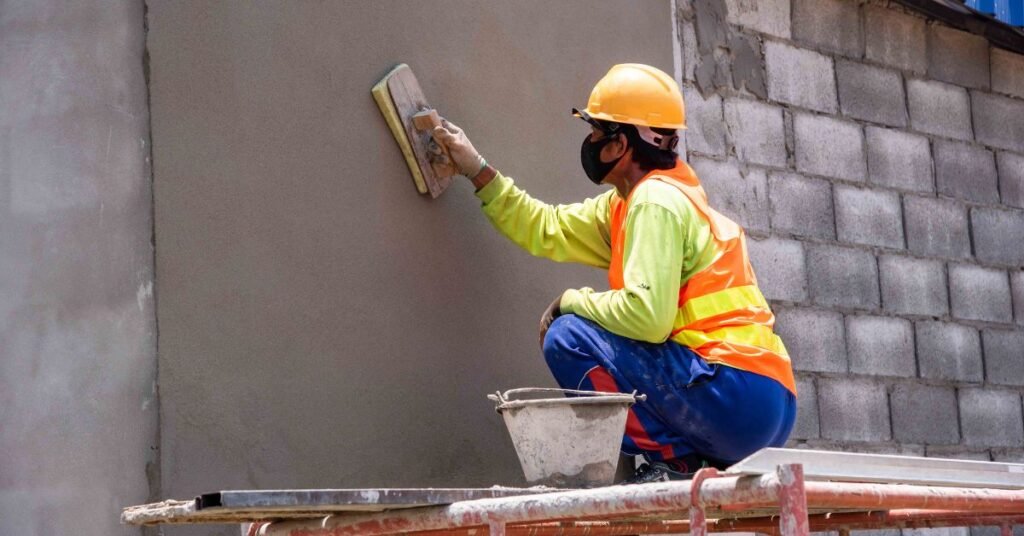

🧱 The Foundation Builders: Your Guide to a Dual-Skilled Career as a Carpenter/Mason
Hello, hands-on masters and shapers of the built world! When you look at a beautiful, sturdy home or a soaring commercial building, you are looking at the combined precision of two foundational trades. The professionals who lay the wooden skeleton and wrap it in a permanent, durable skin of stone and concrete are the Carpenter and the Mason.
Combining the skills of a Carpenter (the artist of wood and framework) and a Mason (the expert of stone, brick, and block) creates an immensely versatile, high-demand, and highly valuable construction professional. This dual expertise allows you to work across the entire lifecycle of a structure, from the footings to the roof trusses, offering unique job stability and entrepreneurial opportunity.
We’re putting on our tool belts and setting the mortar pan to explore this powerful combination of trades—dissecting the broad job description, the necessary apprenticeship and certification, and the unique blend of precision, structural knowledge, and material science that defines this master builder. Get ready to build your dual-threat career!
🏗️ The Carpenter/Mason’s Job Description: The Versatile Builder
This professional is skilled in working with the two most essential building materials: wood and masonry. They are responsible for the structural integrity and aesthetic finishing of a building’s key elements, often managing projects from the ground level up.
Core Responsibilities:
Carpenter Focus (The Structural & Finishing Expert):
- Framing: Constructing and erecting the wooden framework for buildings, including walls, floors, roofs, and door/window openings, ensuring structural stability and adherence to load-bearing calculations.
- Formwork: Building temporary wooden molds (forms) for concrete pouring (foundations, slabs, columns, beams). This requires extreme precision, as the formwork dictates the final concrete shape.
- Finishing Work: Installing detailed interior and exterior woodwork, such as trim, molding, cabinetry, wall paneling, drywall, and siding, often requiring intricate cuts and fine craftsmanship.
- Roofing and Decking: Constructing roof trusses, applying sheathing, and building outdoor structures like decks and porches.
Mason Focus (The Durable & Aesthetic Expert):
- Laying Masonry: Cutting, shaping, and laying stone, brick, concrete blocks, and pre-cast blocks to construct walls, chimneys, foundations, walkways, and arches using mortar or cement.
- Mixing and Working Mortar: Selecting, measuring, and mixing different types of mortar, concrete, and grout based on weather conditions, structural needs, and aesthetic requirements.
- Foundation and Footings: Building or assisting with the construction of masonry foundations and footings, ensuring proper drainage and stability below grade.
- Restoration: Repairing and restoring old or damaged masonry work, often requiring the precise matching of historical mortar and materials.
Shared & Critical Responsibilities:
- Blueprint Interpretation: Reading and translating complex architectural blueprints and engineering specifications to accurately measure, lay out, and construct projects.
- Site Measurement and Layout: Using surveying tools (levels, transits, lasers) and traditional geometry to establish straight, plumb, and square lines for both wooden frames and masonry walls.
- Safety and Compliance: Adhering strictly to all building codes, structural specifications, and site safety protocols (OSHA or local equivalent), especially when working at heights or with heavy materials.
The dual-skilled professional is invaluable because they understand how the flexible, framed interior interfaces with the rigid, durable exterior.
🎓 Experience and Qualifications: Mastering Two Disciplines
Achieving competence in both Carpentry and Masonry is a multi-year effort that combines formal instruction in two different trades with extensive, hands-on field experience.
Essential Qualifications:
- Education: A High School Diploma or GED is required, ideally with strong practical math skills (geometry, fractions).
- Dual Apprenticeship or Cross-Training: The ideal path involves completing a Carpentry Apprenticeship (typically 3-4 years) and supplementing it with specialized Masonry training (vocational school or dedicated masonry apprenticeship). This comprehensive training ensures mastery of two distinct skill sets.
- Trade Certifications: Certification and licensing vary widely by region, but often include:
- Journeyman Carpenter License: Achieved after required OJT hours and a licensing exam.
- Masonry or Bricklaying Certification: Often available through trade associations (like the NCCER) or specialized guilds, verifying competence in techniques like brick veneer or block laying.
- Hands-on Experience: Extensive field experience (at least 4-6 years combined) is crucial, allowing the professional to work with different materials, complex joint types, and specialized tools for both trades.
- Physical Strength and Stamina: This is highly demanding physical work. It requires lifting heavy lumber, bags of concrete, mixing mortar, and standing/kneeling for long periods in various weather conditions.
- Safety Training: Mandatory training and certification in construction safety, often including OSHA 10- or 30-Hour certification, focusing on ladder safety, scaffolding, and heavy equipment operation.
The dual expert’s value comes from the ability to accurately foresee and resolve conflicts between the wooden and masonry elements of a design.
💡 Special Skills: The Carpenter/Mason’s Dual Toolkit
This professional excels through a unique fusion of the fine precision required for wood and the structural strength demanded by masonry.
Technical & Precision Skills (Hard Skills):
- Advanced Blueprint Reading (Dual Focus): The ability to read architectural drawings and understand both the structural framing layout (Carpenter) and the wall section details for masonry placement (Mason).
- Structural Math Mastery: Expert calculation of complex roof pitches, stairs, load-bearing points (Carpenter), combined with calculating mortar mix ratios and quantity take-offs for bricks or blocks (Mason).
- Meticulous Measuring: Unwavering dedication to precision. Wood cuts must be exact to a fraction of an inch; masonry requires perfect plumbing and leveling across long distances to prevent structural failure.
- Material Science Knowledge: Understanding the properties of lumber (shrinkage, warping), metal fasteners (correct connections), and the curing, strength, and weather resistance of various mortar and concrete mixes.
- Tool Mastery: Expert proficiency with a broad range of power tools (table saws, chop saws, routers) and traditional masonry tools (trowels, levels, plumb lines, brick hammers).
Professional & Essential Skills (Soft Power):
- Systematic Workflow Planning: The ability to plan the sequence of work, often transitioning from one trade to the other (e.g., building the foundation forms, pouring concrete, stripping forms, then framing walls on top).
- Attention to Detail and Aesthetics: The patience to ensure fine carpentry finishes are seamless and the aesthetic skill to ensure mortar joints are clean, uniform, and visually appealing.
- Communication and Coordination: Effectively communicating needs (lumber, mortar, steel supports) and coordinating workflow with other trades (Plumbers, Electricians) to ensure utility installation fits within the framed or masonry structure.
- Resilience and Problem-Solving: The ability to find fast, code-compliant solutions to unexpected field issues, such as dealing with rotten wood in a renovation or finding an unstable subgrade for a masonry wall.
- Safety First Mindset: Maintaining strict safety, especially when working on scaffolding or when handling powerful cutting and mixing equipment for both wood and stone.
🚀 The Impact: Stability and Entrepreneurship
The Carpenter/Mason is a cornerstone of the construction industry. This dual expertise dramatically increases job security and earning potential, making the individual invaluable for small- to mid-sized construction firms or as an independent general contractor. They are the essential generalists who can supervise, manage, and execute the most critical phases of any new build or restoration.
If you are disciplined, strong, love working with your hands, and are ready to master the artistic precision of wood alongside the durable strength of masonry, then this versatile dual-trade career is your most stable path to building a successful future.