

⚙️ The Engine Room Expert: Your Guide to a High-Tech Career as a Production Operator
Hello, focused professionals and masters of complex processes! Have you ever bought a product—a pharmaceutical, a specialized chemical, or a precision electronic component—and taken for granted its consistent quality and perfect specifications? The person who ensures that perfect consistency, day in and day out, is the highly trained Production Operator (often called a Process Technician, Machine Operator, or Line Technician).
A career as a Production Operator is the backbone of modern manufacturing and industrial processing. This is a technical, demanding role that requires a blend of mechanical aptitude, IT proficiency, and an intense focus on precision and safety. You are the critical link between raw materials and finished goods, responsible for managing multi-million-dollar machinery and ensuring zero-defect output.
We’re stepping onto the manufacturing floor to explore this essential profession—dissecting the high-responsibility job description, the technical training that builds expertise, and the unique combination of systematic thinking and rapid problem-solving that defines an exceptional Operator. Get ready to control the output and optimize the process!
🏭 The Production Operator’s Job Description: The Conductor of the Process
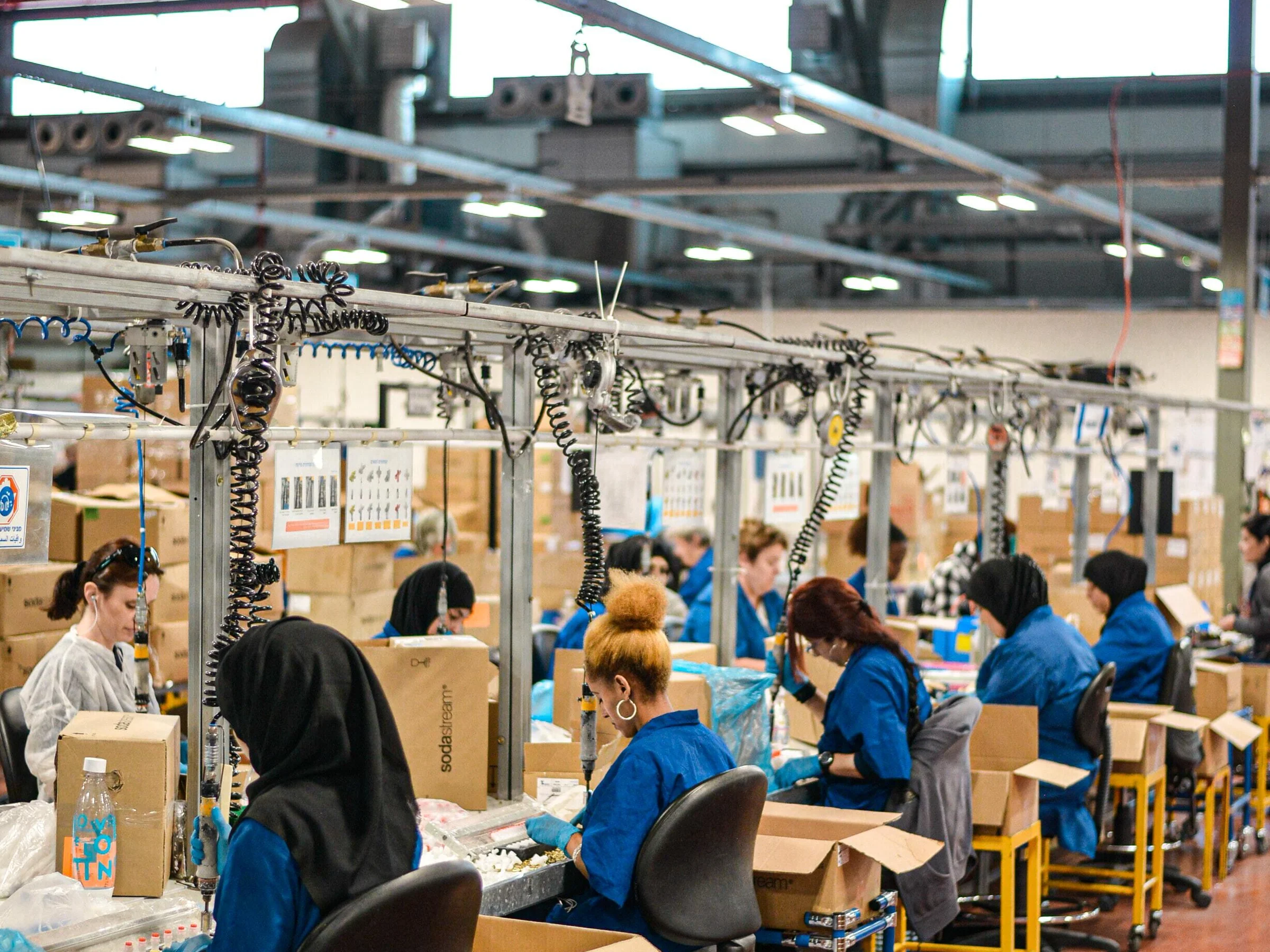
A Production Operator is responsible for setting up, operating, monitoring, and maintaining complex machinery and automated systems within a manufacturing or processing plant (e.g., chemical, food, automotive, pharmaceutical). Their primary goal is to ensure efficient, safe, and quality-compliant output.
Core Responsibilities:
- Machine Setup and Calibration: Accurately setting up, adjusting, and calibrating equipment (including mixers, presses, reactors, CNC machines, or assembly lines) before a production run to meet precise product specifications and tolerances.
- System Monitoring and Control: Continuously monitoring the production process, often using sophisticated Human-Machine Interfaces (HMIs), control panels, gauges, and sensor data to observe critical parameters (temperature, pressure, flow rate, speed). Making real-time adjustments to maintain optimal process conditions.
- Quality Control (QC): Performing regular in-process quality checks (e.g., dimensional checks, weight, consistency, visual inspection) using measurement tools (calipers, micrometers, scales). Identifying and isolating non-conforming or defective materials immediately.
- Troubleshooting and Maintenance: Diagnosing and resolving minor equipment malfunctions, process upsets, and operational alarms quickly and safely to minimize downtime. Performing routine preventative maintenance (lubrication, cleaning, filter changes) on equipment.
- Inventory and Material Handling: Loading raw materials into the production system (e.g., powders, liquids, components), ensuring correct batch tracking, and accurately transferring finished products to packaging or warehousing areas.
- Documentation and Reporting: Maintaining meticulous records of production output, process conditions, material usage (yield), downtime events, and quality inspection results in logbooks or digital Manufacturing Execution Systems (MES).
- Safety and Compliance: Strictly adhering to all company, regulatory, and environmental safety protocols (e.g., Lockout/Tagout, PPE, handling of hazardous materials, Good Manufacturing Practices or GMP) to ensure a safe work environment and product integrity.
- Team Communication: Effectively communicating shift handovers, operational issues, and maintenance needs to supervisors, maintenance technicians, and incoming operators to ensure seamless continuity of production.
The Production Operator is the hands-on manager of complex technology, responsible for process reliability and product integrity.
🎓 Experience and Qualifications: Training for Precision
The path to becoming a skilled Production Operator often starts with foundational education and is cemented by specialized technical training and a commitment to understanding industrial systems.
Essential Qualifications:
- Education: A High School Diploma or GED is the minimum. However, a Technical Certificate or Associate’s Degree in a relevant field (like Process Technology, Industrial Maintenance, or Mechatronics) is highly preferred and often mandatory for complex or highly regulated industries (e.g., chemical, pharma).
- On-the-Job Training (OJT): Extensive OJT under the supervision of experienced operators is critical. This is where theoretical knowledge translates into practical, machine-specific expertise and process mastery.
- Prior Manufacturing Experience: Experience in a high-volume, regulated manufacturing environment (even in an entry-level capacity) is highly valued, demonstrating familiarity with safety protocols and the pace of production.
- Technical Aptitude: A proven ability to understand mechanical principles, fluid dynamics, and basic electrical systems is necessary for effective troubleshooting and maintenance.
- Safety Certifications: Required certifications often include OSHA 10-Hour training, specialized certifications for handling hazardous materials, or training specific to the industry (e.g., GMP for pharmaceuticals).
- Math and Literacy: Strong basic math skills are needed for calculations, measuring material inputs, and interpreting data on charts and graphs. The ability to read complex Standard Operating Procedures (SOPs) is non-negotiable.
- Physical Requirements: The job often involves standing for long periods, bending, reaching, and occasionally lifting materials. It requires the ability to work in environments that can be noisy, warm, or require specialized PPE.
The successful Operator is defined by their discipline in following procedures exactly and their proactive approach to process control.
💡 Special Skills: The Operator’s Analytical Mind
A superior Production Operator blends mechanical intuition with analytical rigor, allowing them to manage complex systems and anticipate problems before they arise.
Technical & System Skills (Hard Skills):
- Process Control Theory: Deep understanding of the specific industrial process they run (e.g., distillation, batch mixing, injection molding) and how changing one variable (temperature) will affect another (pressure or quality).
- Instrumentation and Calibration: Expertise in reading, interpreting, and performing minor calibrations on industrial sensors, gauges, flow meters, and other measuring instruments.
- Troubleshooting Logic: The systematic skill of using cause-and-effect analysis (like the “5 Whys” method) and process diagrams (P&IDs) to rapidly isolate the root cause of an operational failure or quality deviation.
- HMI and Automation Fluency: Comfort and proficiency in operating advanced Human-Machine Interfaces, understanding programmable logic controller (PLC) status, and making appropriate inputs to the automated control system.
- Quality Assurance Tools: Expertise in using precision measurement tools (calipers, digital gauges) and understanding statistical process control (SPC) charts to monitor product consistency.
Professional & Mental Skills (Soft Power):
- Hyper-Vigilance and Focus: The ability to maintain intense, continuous focus on multiple inputs and subtle machine sounds/vibrations over long shifts, identifying tiny deviations before they escalate into major failures.
- Discipline and Consistency: The unyielding commitment to strictly follow Standard Operating Procedures (SOPs) and quality protocols every time, recognizing that consistency is the foundation of manufacturing quality.
- Systematic Thinking: The mental skill to visualize the entire production line (upstream and downstream) and understand how their actions impact the next stage and the final product.
- Safety Ownership: A personal commitment to safety, ensuring all safety checks (LOTO) are complete and being proactive about hazard identification, protecting not just themselves but their team.
- Clear Communication: The ability to concisely and accurately document and articulate complex machine or process faults to maintenance and engineering teams.
🚀 The Impact: Ensuring Quality and Efficiency
The role of the Production Operator is vital to the global economy. They are the essential professionals who convert raw materials into usable goods, driving efficiency and ensuring the quality that defines major brands. As manufacturing becomes more automated, the need shifts from manual labor to highly skilled Process Technicians who can monitor and manage complex robotics and control systems. This career offers immense stability and a clear path to leadership roles like Lead Operator, Shift Supervisor, or Process Engineering Technician.
If you are systematic, safety-minded, enjoy working with precision technology, and thrive in an environment where your focus directly impacts product quality, then becoming a Production Operator is your opportunity to control the flow of modern industry.