

🔥 Forged in Fire: Your Guide to a Powerful and Precision Career as a Welder
Hello, precision artists and metalworking maestros! Have you ever paused to realize that virtually every piece of modern infrastructure—from skyscrapers and bridges to naval ships and space rockets—is held together by the skill of one indispensable professional? That person is the Welder.
Welding is far more than just melting metal; it is a critical, high-tech, and highly artistic trade that demands extreme focus, deep material science knowledge, and unwavering attention to safety. Welders are the structural backbone of the modern world, combining physics and heat to permanently fuse materials and create bonds that must withstand immense stress, pressure, and time.
This is a career forged in fire, offering excellent job stability, high earning potential, and the immense satisfaction of knowing your work is strong enough to support the world. We’re putting on our personal protective equipment (PPE) to explore this essential profession—dissecting the demanding job description, the rigorous training required, and the unique blend of technical expertise and steady hand that defines a master welder. Get ready to strike your arc!
💥 The Welder’s Job Description: The Fusion Expert
A Welder is a skilled tradesperson who uses specialized equipment to join pieces of metal together, or to repair metal structures, by applying heat and filling the joint with molten material. Their work must meet stringent industry standards for strength, integrity, and compliance.
Core Responsibilities:
- Interpretation of Blueprints: Accurately reading and interpreting complex blueprints, engineering drawings, and welding symbols (AWS or ISO standard) to determine the exact specifications and methods required for the weld joint.
- Surface Preparation and Fit-Up: Cleaning, grinding, and aligning metal pieces to the precise angles and gaps specified in the design before welding begins. This crucial preparation dictates the strength and appearance of the final weld.
- Welding Execution: Operating various welding equipment and mastering multiple processes, including SMAW (Stick), GMAW (MIG), GTAW (TIG), and FCAW (Flux-Cored Arc Welding), selecting the correct filler material, heat settings, and technique for the specific metal (steel, aluminum, stainless steel) and joint configuration.
- Inspection and Quality Control: Visually inspecting welds for defects (cracks, porosity, lack of fusion) and often performing non-destructive testing (NDT) methods like dye penetrant or magnetic particle testing to ensure the weld meets the required structural codes.
- Equipment Maintenance: Maintaining and troubleshooting welding machines, torches, regulators, ventilation systems, and specialized tools to ensure peak operating performance and safety.
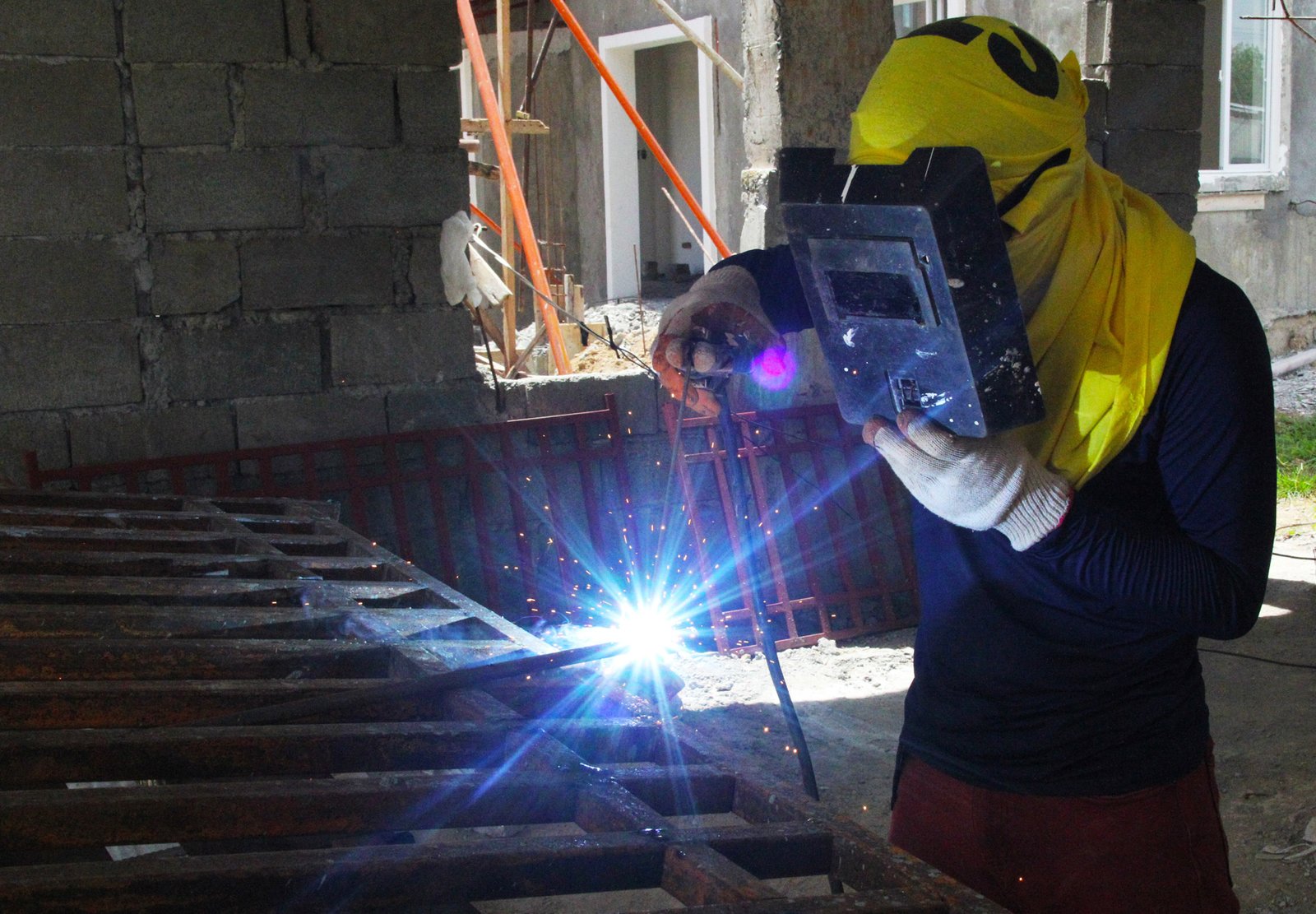
- Safety Protocol: Strictly adhering to all safety regulations, including wearing mandated PPE (welding helmet, flame-resistant clothing, gloves), ensuring proper ventilation to manage fumes, and following fire prevention procedures.
- Material Management: Cutting, shaping, and positioning metal parts using saws, plasma cutters, grinders, and torches, often requiring proficiency in basic fabrication techniques.
- Documentation: Maintaining accurate records of work performed, materials used, and quality test results, especially on critical or certified projects.
The Welder is the critical link between raw materials and a finished structure, ensuring every joint is a permanent, reliable bond.
🎓 Experience and Qualifications: Forged in Skill and Certification
The pathway to becoming a highly paid Welder emphasizes rigorous vocational training, extensive hands-on practice, and achieving official certifications that prove competence in specific welding processes.
Essential Qualifications:
- Education: A High School Diploma or GED is the minimum requirement. This must be supplemented by vocational training in welding.
- Vocational/Technical School Training: Completion of a comprehensive welding program (typically 6 months to 2 years) at a community college or technical school. This provides the crucial theoretical knowledge of metallurgy, electricity, and the different welding processes.
- Welding Certifications (The Gold Standard): Certification is the key to employment and higher pay. The most recognized certifications are issued by the American Welding Society (AWS), such as the Certified Welder program. Certification is typically required for specific combinations of position, process, and material (e.g., GMAW in the horizontal position on mild steel).
- Apprenticeship or Entry-Level Experience: Gaining hands-on experience as an apprentice or Welder Helper is vital for building speed, consistency, and stamina. Many master welders gain years of experience refining their skills under supervision.
- Physical Fitness and Stamina: The job demands physical strength to handle heavy materials, work in awkward or confined positions, and maintain a steady hand for hours.
- Blueprint and Code Proficiency: Demonstrated ability to read and understand the complex symbols used in welding blueprints, and a working knowledge of relevant industry codes (like AWS D1.1 for Structural Steel).
The quality and variety of a Welder’s certifications directly correlate with their job mobility and earning potential.
💡 Special Skills: The Welder’s Precision and Focus
A master Welder possesses an intense concentration, surgical precision, and a deep, practical understanding of how heat and metal interact.
Technical & Diagnostics Skills (Hard Skills):
- Multi-Process Proficiency: Mastery of at least two of the core processes (MIG, TIG, Stick). TIG welding (GTAW) is often considered the pinnacle of skill, requiring exceptional dexterity and precision for clean, high-quality welds on thinner or specialized materials (like stainless steel).
- Thermal Management: An intuitive understanding of how heat affects different metals—preventing warping, controlling penetration, and achieving the correct fusion depth for maximum strength.
- Code and Specification Adherence: The unwavering discipline to follow detailed procedural specifications (WPS) exactly, as deviations can compromise structural integrity and fail quality inspection.
- Joint Geometry Mastery: Expert knowledge of different joint types (butt, lap, corner, T-joint) and the correct preparation (beveling, root gap) required to ensure 100% weld penetration.
- Inspection and Nondestructive Testing (NDT): The ability to visually spot minute flaws like undercut or overlap, and often the skill to perform basic NDT techniques to confirm internal integrity.
Professional & Mental Skills (Soft Power):
- Extreme Concentration and Patience: Maintaining absolute focus for extended periods while watching the molten puddle. Welding is a meditative process where distractions lead to defects. Patience is required for preparation and inspection.
- Attention to Detail and Meticulousness: The final weld is only as good as the prep work. Meticulous cleaning, grinding, and measuring are essential steps that cannot be skipped or rushed.
- Spatial Awareness and Coordination: Exceptional hand-eye coordination and fine motor skills are necessary to manipulate the torch and filler material simultaneously, especially when welding out of position (vertical, overhead).
- Safety Culture: A constant, non-negotiable commitment to safety, understanding the risks of arc flash, fumes, and fire, and strictly adhering to PPE requirements.
- Adaptability: The ability to weld in challenging, confined, or extreme environments (e.g., shipyards, pipelines, elevated platforms) and quickly adjust techniques based on the conditions.
🚀 The Impact: A Career That Builds the World
The Welder’s profession is fundamental to every industry—from automotive manufacturing and infrastructure construction to aerospace and energy production (oil, gas, nuclear). As technology advances, the demand for certified welders who can work with exotic materials and perform specialized orbital or robotic welding techniques only increases. This is a career of profound skill, offering outstanding job stability and opportunities for global travel or specialization (e.g., underwater welding, pipe welding).
If you are steady-handed, detail-oriented, enjoy solving practical, geometric puzzles, and want a career where you can proudly point to the structures you built, then forging a career as a certified Welder is your path to an impactful future.