


🔨 Forged by Fire: The Enduring Craft and Career of the Modern Smith
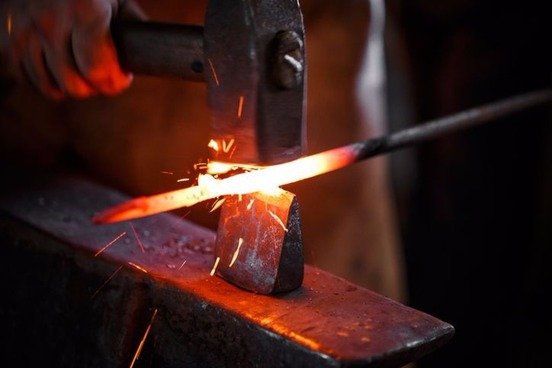
Hello, fire-starters, metal mavens, and makers of enduring objects! When you hear the word “Smith,” what comes to mind? Is it the dramatic silhouette of a blacksmith hammering glowing iron against an anvil? While the image of the traditional blacksmith (the smith of iron and steel) is iconic, the title Smith is one of the oldest, most expansive, and most enduring professional titles in human history.
A Smith is, fundamentally, a craftsperson who works metal. Today, this field has splintered into specialties, from the heavy-duty artistry of the Bladesmith and the fine precision of the Goldsmith, to the essential security work of the Locksmith. Across all these disciplines, the job demands a critical blend of immense physical strength, scientific knowledge (metallurgy), artistic vision, and a dedication to durability that simply does not exist in mass-produced items.
We’re stepping into the heart of the forge—both literal and figurative—to explore this versatile and powerful profession. We will dissect the multifaceted job description, the rigorous training required to master the metal, and the unique combination of technical skill and creative resilience that defines an expert Smith. Get ready to strike while the iron is hot and forge a powerful career path!
🔥 The Smith’s Job Description: The Metalsmith and Artisan
The overarching role of a Smith (or Metalsmith) is to fashion useful, structural, or artistic items out of metal by applying heat, force, and precision. Depending on the specialty, the scope of work can range from minute jewelry repair to the creation of large architectural ironwork.
Core Responsibilities (Focusing on Blacksmithing & Bladesmithing):
- Material Selection and Preparation: Identifying the appropriate metal (iron, high-carbon steel, copper, silver, etc.) for the project’s functional or aesthetic requirements. Cutting, grinding, and preparing the raw stock for the forge.
- Heat Control and Forging: Operating and managing a forge (coal, gas, or induction) to heat the metal to a precise, malleable temperature (forging heat). Shaping the hot metal using a variety of hammers, tongs, punches, and an anvil through techniques like drawing out, upsetting, bending, and twisting.
- Welding and Joining: Joining pieces of metal using both traditional techniques like forge welding and modern methods such as MIG, TIG, or arc welding, ensuring joints are both structurally sound and aesthetically clean.
- Heat Treatment: Applying crucial metallurgical processes like hardening, tempering, and annealing to specific metals (especially steel) to achieve the final desired properties of hardness, toughness, and flexibility. This step is critical for tools and blades.
- Finishing and Assembly: Cleaning, grinding, sanding, and polishing the final piece. Applying protective coatings (oils, wax, galvanization) and assembling complex structures (gates, railings) or attaching non-metal components (wood handles, leather sheaths).
- Design and Blueprint Interpretation: Creating original designs, or accurately interpreting customer specifications, engineering drawings, and historical patterns to ensure the final product is fit for purpose and dimensionally accurate.
- Maintenance and Safety: Maintaining all shop equipment, including hammers, anvils, and the forge itself. Strictly adhering to all safety protocols regarding heat, heavy tools, sparks, and ventilation.
- Client Consultation: Providing estimates, discussing material properties, offering design solutions, and communicating the timeline and technical requirements for custom commissions.
The Smith transforms a brute material into a functional work of art, with durability being the ultimate measure of quality.
🎓 Experience and Qualifications: Forging Mastery
A Smith’s journey is typically built on a foundational understanding of physics and chemistry, honed through intense, hands-on practice, often outside of traditional academic settings.
Essential Qualifications:
- Education: A High School Diploma or GED is standard. Coursework in math (geometry, measurement), physics, and chemistry is highly beneficial for understanding material science and heat transfer.
- Apprenticeship or Mentorship: This is the most critical path. Many successful Smiths complete an informal or formal apprenticeship (often 3 to 7 years) under a seasoned Master Blacksmith, Bladesmith, or Goldsmith. This time is dedicated to building the necessary muscle memory, speed, and critical eye.
- Vocational Training/Certification: Completion of programs in Forgework, Welding, or Metalsmithing from a technical school, community college, or specialized arts center. These provide structured knowledge of safety, metallurgy, and different techniques.
- Portfolio and Demonstrated Skill: A robust portfolio showcasing a range of techniques, materials, and complexity (e.g., tongs, knives, decorative scrolls, complex joints) is essential for attracting work or gaining higher-level jobs.
- Specialized Certifications: Depending on the field, certifications can be required or highly valued, such as a Certified Welder (if joining is required) or specialized guild certifications for Bladesmithing (e.g., American Bladesmith Society Journeyman/Master certifications).
- Physical Conditioning: The work requires significant physical stamina, arm strength, and endurance for repetitive hammering, heavy lifting, and enduring a hot, noisy environment.
A Smith is defined by the quality of their hands-on hours, not just their classroom time.
💡 Special Skills: The Fire-Wielder’s Intuition
The truly exceptional Smith combines the brute power of the hammer with the delicate intuition of an artist, making them masters of both force and finesse.
Technical & Intuitive Skills (Hard Skills):
- Thermal Control and Color Reading: The most fundamental skill. The ability to read the color of the glowing metal precisely (from cherry red to white heat) to know its exact temperature and workability, preventing burning or cracking.
- Rhythm and Muscle Memory: The physical dexterity to strike the metal with consistent, controlled force in a precise rhythm, transforming the material into the desired shape with minimal wasted effort.
- Material Diagnostics (Metallurgy): An intuitive understanding of how different alloys will behave under stress and heat, how to prevent warping and cracking during quenching, and how to maximize material yield.
- Dimensional Accuracy: The ability to work without measuring frequently, using hand-eye judgment to taper, lengthen, or thicken a section of metal to highly accurate dimensions.
- Tool Fabrication and Maintenance: The expertise to make and maintain their own specialized tools (chisels, punches, tongs), as custom tools are often necessary for custom jobs.
Professional & Artistic Skills (Soft Power):
- Patience and Persistence: The understanding that a single complex piece may require dozens of heating and hammering cycles over many hours or days, demanding relentless focus and patience.
- Design Vision and Form: The artistic eye to visualize the final three-dimensional form from a raw block of material, understanding how to balance aesthetics with structural integrity.
- Safety Rigor: An unwavering commitment to the strict, necessary safety protocols in an inherently dangerous workplace (fire, heavy objects, power tools, chemical fumes).
- Problem-Solving on the Fly: The skill to rapidly diagnose a mistake (e.g., a bend going wrong, a temperature drop) and make split-second adjustments to salvage the material without compromising the final quality.
- Customer Communication: The ability to translate abstract ideas (e.g., “I want a gothic fence”) into technical material requirements and construction timelines.
🚀 The Impact: Where Heritage Meets Modernity
The Smith profession is experiencing a powerful renaissance, particularly in the areas of architectural restoration, custom furniture, high-end culinary blades, and artistic sculpture. While the methods honor centuries of heritage, the modern Smith uses new technology (induction forges, advanced welders) to create items of incomparable quality and permanence. This career offers immense personal satisfaction, a strong sense of cultural preservation, and a lucrative pathway through self-employment or specialized industrial work.
If you are drawn to the heat of the forge, respect the power of metal, and find fulfillment in creating objects that are built to last a thousand years, then forging a career as a Smith is your true calling.